Dear All,
School here is interesting, different, and as well kind of boring. I can't really stand listening to people being taught in Hebrew, my friends talking in he Hebrew, and the whole world in Hebrew for almost 7 hours strait!! Okay, I am exaggerating a little to make it more dramatic, but still i mean... There is one class though that I can follow. English. The teacher only talks in English! Something I'm used to! Just, I learned it in kindergarten. Math is okay to because the teacher talks in Hebrew, but numbers are numbers, and I think I know how to count. Everything else...whew! I am gone. Well I try not to be, but it's kinda hard. I mean really... you try it!I have learned... let me think... almost nothing. I can't learn anything! I guess if math were a lot harder I would learn something, or if I knew Hebrew!!!!! That's the key!!!!! I'm getting a tutor with Miriram so I can learn Hebrew!!!! Go me!!!!!!
Wednesday, February 16, 2011

What About Egypt?
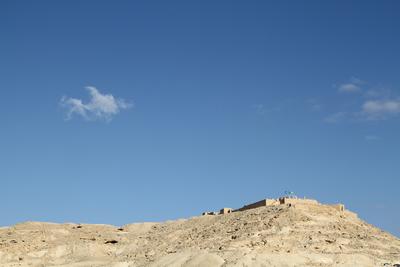
A few days ago we had a chance to peer into Egypt. We drove right by a commercial vehicle border crossing near the city of Nitzana. Below is a picture of the Egyptian side of the crossing in which you can see the Egyptian flag. The other picture shows more of the Egyptian border facility in the Sinai desert.


Even before we left on our trip the government fell in Tunisia which inspired the protests that ultimately forced Mubarak from power. While we were still in Colorado people were asking us if the protests had caused us to be concerned about our safety and if we would cancel our trip. The answers to those questions were just a little and no. Given the events of the last few weeks they haven’t changed.
Although we’re only about 20 miles from the Egyptian border here in Sde Boker, the events in Egypt haven’t had much effect on us. The protest movement that is sweeping the Arab world is unlikely to come to Israel. It’s already a participatory democracy. The protests are also unlikely to spill over the border into Israel. Between us and Cairo is the entire Sinai desert and the Israeli army. The Arabian protest movement is unlikely to lead to a new Middle East war anytime soon. The countries involved will be far too concerned with internal affairs to get involved in any outward aggression.
Despite having established that I’m not immediately concerned for our personal safety, I do see the potential for such unrest in Egypt to affect our trip over time. One possibility is that Egyptian security forces in the Sinai will be distracted by the change in government, and as a result, be less vigilant in keeping terrorist groups from using the Sinai to launch rockets and other types of attacks into Israel. Such an attack did take place last summer, when a terrorist group launched a rocket from the Sinai. The rocket actually overshot Israel and tragically killed and injured a handful of people in the Jordanian resort town of Aqaba. So far, that possibility has yet to manifest itself. Indeed, just the other day, Egyptian security forces caught a terrorist cell in the Sinai attempting to perpetrate an attack and stopped it.
The second, and much more likely possibility, is that things in Egypt don’t calm down soon enough to enable us to visit that country as we had planned. Already there seem to be disagreements over the authority the army holds in Egypt, with the army calling for an end to strikes and public protests. The other day a friend of ours here in Sde Boker canceled a long planned trip to Cairo. There are also news reports today that a CBS reporter was brutally assaulted in Tahrir Square a few days ago. It seems unlikely that the situation will be stable enough to allow for a family trip in the next few months.
But enough about me. The obvious follow up question to ask is whether or not the fall of Mubarak, and the wave of protests engulfing the Arab world is a good thing or bad thing for the United States and Israel. The answer is complex and depends on a wide variety of unknowns. Before I speculate on this question (I wouldn’t pretend to actually answer it), there is a distinction I’d like to make: What’s good for Israel isn’t always what’s good for the U.S. and vice versa. Given the complex relationship between the U.S. and Israel, however, I’m going to ignore those differences for the purposes of this blog entry and just focus on common interests.
That said, I want to make it clear I’m delighted for the Egyptian people. It’s rare that a society is able to escape from the rule of a corrupt and brutal autocrat. To do so, as the Egyptians have done, with so little violence (at least perpetrated by the protesters) and widespread public support, is even rarer. The Egyptian people have long suffered under the thumb of such despotic kleptocracies. I hope they truly will establish a new government that enables widespread democratic participation as well as the human rights we enjoy in the U.S.
And there lies the rub. It’s not at all clear what sort of government will replace Mubarak. The army has pledged to modify the constitution, hold elections, and yield to a civilian government in six months. It remains to be seen whether it really does so and what form that government takes.
The worst possible outcome would seem to be if an Islamic supremacist group were to take over this new government. There’s already widespread precedent in the region for this to happen, with Iran, Lebanon, Gaza, and Afghanistan being prime examples. The Muslim Brotherhood is one of the better organized institutions functioning in Egypt right now, and it counts among its alumni Ayman al-Zawahiri, the second in command at al-Qaeda.
Even the best possible outcome, a democratically elected government with widespread public support, would still present significant risks to the U.S. and Israel. Many Egyptians are quite contemptuous of the United States and Israel, and any government that reflects such public opinion would likely be hostile towards American and Israeli interests. For example, a recent Zogby poll taken before Mubarak’s ouster found that 85% of Egyptians had an unfavorable attitude toward the U.S., and 92% named the U.S. as one of two nations that are the greatest threat to them. 90% also named Israel as one of two nations that are the greatest threat to them.
Notwithstanding such hostility, the U.S. and Israel would still be better off with a more democratic Egypt, and hopefully, a more democratic Arab world. Such a world would allow for more constructive dialogue which would likely lead to better outcomes than are currently being achieved. To have more prosperous, communicative, and educated societies on its borders could well enable Israel to engage in more positive relationships with its neighbors. Such societies would likely be better able to persuade the U.S. and Israeli to modify those policies they find objectionable. The availability of a channel for expressing disagreement and exploring solutions could well lead to a reduction in frustration and violence.
Certainly, recent events will not lead to a Middle East utopia anytime soon, or ever for that matter. There will likely still be plenty of hostility, violence, and conflict. I only mean to suggest that a Middle East that features more governments that are more responsive to their populations would be a better Middle East than the one we have now. In light of the continually degrading situation we’ve experienced in the past few decades, even slightly better would constitute a major improvement.

This is a picture of a just a tiny part of a public art work we saw in Nitzana. Titled Path of Peace, and produced by the Israeli artist Dani Karavan, it consists of 100 concrete columns, each featuring the word peace in a different language. The entire work is over 3 km long. The column featured here bears the word Namaste, which means peace in the Nepali language.


Even before we left on our trip the government fell in Tunisia which inspired the protests that ultimately forced Mubarak from power. While we were still in Colorado people were asking us if the protests had caused us to be concerned about our safety and if we would cancel our trip. The answers to those questions were just a little and no. Given the events of the last few weeks they haven’t changed.
Although we’re only about 20 miles from the Egyptian border here in Sde Boker, the events in Egypt haven’t had much effect on us. The protest movement that is sweeping the Arab world is unlikely to come to Israel. It’s already a participatory democracy. The protests are also unlikely to spill over the border into Israel. Between us and Cairo is the entire Sinai desert and the Israeli army. The Arabian protest movement is unlikely to lead to a new Middle East war anytime soon. The countries involved will be far too concerned with internal affairs to get involved in any outward aggression.
Despite having established that I’m not immediately concerned for our personal safety, I do see the potential for such unrest in Egypt to affect our trip over time. One possibility is that Egyptian security forces in the Sinai will be distracted by the change in government, and as a result, be less vigilant in keeping terrorist groups from using the Sinai to launch rockets and other types of attacks into Israel. Such an attack did take place last summer, when a terrorist group launched a rocket from the Sinai. The rocket actually overshot Israel and tragically killed and injured a handful of people in the Jordanian resort town of Aqaba. So far, that possibility has yet to manifest itself. Indeed, just the other day, Egyptian security forces caught a terrorist cell in the Sinai attempting to perpetrate an attack and stopped it.
The second, and much more likely possibility, is that things in Egypt don’t calm down soon enough to enable us to visit that country as we had planned. Already there seem to be disagreements over the authority the army holds in Egypt, with the army calling for an end to strikes and public protests. The other day a friend of ours here in Sde Boker canceled a long planned trip to Cairo. There are also news reports today that a CBS reporter was brutally assaulted in Tahrir Square a few days ago. It seems unlikely that the situation will be stable enough to allow for a family trip in the next few months.
But enough about me. The obvious follow up question to ask is whether or not the fall of Mubarak, and the wave of protests engulfing the Arab world is a good thing or bad thing for the United States and Israel. The answer is complex and depends on a wide variety of unknowns. Before I speculate on this question (I wouldn’t pretend to actually answer it), there is a distinction I’d like to make: What’s good for Israel isn’t always what’s good for the U.S. and vice versa. Given the complex relationship between the U.S. and Israel, however, I’m going to ignore those differences for the purposes of this blog entry and just focus on common interests.
That said, I want to make it clear I’m delighted for the Egyptian people. It’s rare that a society is able to escape from the rule of a corrupt and brutal autocrat. To do so, as the Egyptians have done, with so little violence (at least perpetrated by the protesters) and widespread public support, is even rarer. The Egyptian people have long suffered under the thumb of such despotic kleptocracies. I hope they truly will establish a new government that enables widespread democratic participation as well as the human rights we enjoy in the U.S.
And there lies the rub. It’s not at all clear what sort of government will replace Mubarak. The army has pledged to modify the constitution, hold elections, and yield to a civilian government in six months. It remains to be seen whether it really does so and what form that government takes.
The worst possible outcome would seem to be if an Islamic supremacist group were to take over this new government. There’s already widespread precedent in the region for this to happen, with Iran, Lebanon, Gaza, and Afghanistan being prime examples. The Muslim Brotherhood is one of the better organized institutions functioning in Egypt right now, and it counts among its alumni Ayman al-Zawahiri, the second in command at al-Qaeda.
Even the best possible outcome, a democratically elected government with widespread public support, would still present significant risks to the U.S. and Israel. Many Egyptians are quite contemptuous of the United States and Israel, and any government that reflects such public opinion would likely be hostile towards American and Israeli interests. For example, a recent Zogby poll taken before Mubarak’s ouster found that 85% of Egyptians had an unfavorable attitude toward the U.S., and 92% named the U.S. as one of two nations that are the greatest threat to them. 90% also named Israel as one of two nations that are the greatest threat to them.
Notwithstanding such hostility, the U.S. and Israel would still be better off with a more democratic Egypt, and hopefully, a more democratic Arab world. Such a world would allow for more constructive dialogue which would likely lead to better outcomes than are currently being achieved. To have more prosperous, communicative, and educated societies on its borders could well enable Israel to engage in more positive relationships with its neighbors. Such societies would likely be better able to persuade the U.S. and Israeli to modify those policies they find objectionable. The availability of a channel for expressing disagreement and exploring solutions could well lead to a reduction in frustration and violence.
Certainly, recent events will not lead to a Middle East utopia anytime soon, or ever for that matter. There will likely still be plenty of hostility, violence, and conflict. I only mean to suggest that a Middle East that features more governments that are more responsive to their populations would be a better Middle East than the one we have now. In light of the continually degrading situation we’ve experienced in the past few decades, even slightly better would constitute a major improvement.

This is a picture of a just a tiny part of a public art work we saw in Nitzana. Titled Path of Peace, and produced by the Israeli artist Dani Karavan, it consists of 100 concrete columns, each featuring the word peace in a different language. The entire work is over 3 km long. The column featured here bears the word Namaste, which means peace in the Nepali language.
Tuesday, February 15, 2011
Valentine's Day: wine, food and song
Yesterday Raz Arbal, the head of tourism for the Negev Regional Council, and the one who got us started on this whole adventure (I’ll blog about that another time) took us on a tour of a few of the area’s highlights.
We started off at the Carmey Avdat winery, a few km away. The guest cabins are very simple and away from it all. The hammocks in front were calling our names.

The grounds are beautiful, with many flowering trees, even in the winter.
This is an almond tree.

We enjoyed a tour of the winery with the friendly owner, who ten years ago had never grown grapes nor made wine. The vineyard is on the same land farmed nearly 2000 years ago by the Nabateans. The grapes would have been taken to Avdat to be pressed and made into wine. Today, they do the winemaking on-site. They grow two kinds of grapes, and from them make several wines from Rose to Merlot and Cabernet to Port.
 Jay tasting

Following our wine tasting, we had a 9 am meeting (yes, you read the chronology correctly!) with the mayor of Ramat Negev, Shmuel Rifman. Jay and I had wondered what to wear for meetings with dignitaries. We packed very light, so didn’t have much selection, but did wash our jeans and wear our nicest shirts for the occasion. We need not have worried. Dress is decidedly casual here. Mayor Rifman gets up every morning at 5:30 am and takes a picture at sunrise. A series of his photos adorns the walls. I’m embarrassed to say I’m off my normal schedule and haven’t been up before 7 yet, but I'm inspired to follow his example. He is reputed to be an excellent cook and I’d read somewhere that he teaches cooking classes. When I asked about taking one, he responded that we should come to his house for dinner sometime.

Next we went to the Ramat Negev AgroResearch Center. The Center is finding ways to grow vegetables in the desert. It’s both a research center and an extension service. Staff spend several days a week taking what they’ve learned to local farmers. Students from Burma and Viet Nam also come to learn the latest farming techniques. It is almost mind-boggling to think of this arid region as a major vegetable exporter.
Water, in very scarce supply in all of Israel and especially here, is the key to agriculture in the desert. The researchers at the AgroCenter are learning how to grow crops with brackish (partly salty) water. They drill down 1000m and find an aquifer of hot (~105 degrees F) brackish water. It naturally rises to sea level and they pump it up the remaining 300m. The brackish water is mixed with fresh water, experimenting to find what the plants will tolerate. The whole thing is computer controlled.
Check out the size of these tomatoes! They are actually hoisted up as they grow.
Tomatoes start with fresh water, and, as they grow, brackish water is slowly introduced. The plants grow better if their roots are warm. You probably think of it as hot here, but now—winter—it’s often in the 60s during the day and 40s or 50s at night, pretty cool for tomatoes. Turns out warming the roots helps the plants tolerate the brackish water better too. So, they pipe the hot brackish water coming out of the ground along the rows of plants before using it for irrigation. Using these methods, 1/4 of an acre of greenhouse/nethouse can produce 25 tons of tomatoes annually.

Notice how little soil these huge plants are growing in. The salt from the brackish water accumulates in the soil, so the soil has to be changed each year.
The bees which fertilize the plants come in boxes instead of hives. There’s a company that delivers bees-in-a-box regularly.

The tomatoes are incredibly sweet. The researchers adjust the amount of water, light, etc, and measure the results in the tomatoes. They’re currently working on cherry tomatoes that ripen evenly all the way down the bunch, as opposed to the furthest ones out being greener, as they naturally are. They are developing cherry tomatoes that are sweet and ripe when they’re green. We tried them and they are delicious. The advantage for the farmers is they can be picked and shipped green and will have a longer shelf life.


We started off at the Carmey Avdat winery, a few km away. The guest cabins are very simple and away from it all. The hammocks in front were calling our names.

The grounds are beautiful, with many flowering trees, even in the winter.
This is an almond tree.

We enjoyed a tour of the winery with the friendly owner, who ten years ago had never grown grapes nor made wine. The vineyard is on the same land farmed nearly 2000 years ago by the Nabateans. The grapes would have been taken to Avdat to be pressed and made into wine. Today, they do the winemaking on-site. They grow two kinds of grapes, and from them make several wines from Rose to Merlot and Cabernet to Port.
Eyal, the winemaker
 Jay tasting
Following our wine tasting, we had a 9 am meeting (yes, you read the chronology correctly!) with the mayor of Ramat Negev, Shmuel Rifman. Jay and I had wondered what to wear for meetings with dignitaries. We packed very light, so didn’t have much selection, but did wash our jeans and wear our nicest shirts for the occasion. We need not have worried. Dress is decidedly casual here. Mayor Rifman gets up every morning at 5:30 am and takes a picture at sunrise. A series of his photos adorns the walls. I’m embarrassed to say I’m off my normal schedule and haven’t been up before 7 yet, but I'm inspired to follow his example. He is reputed to be an excellent cook and I’d read somewhere that he teaches cooking classes. When I asked about taking one, he responded that we should come to his house for dinner sometime.

Next we went to the Ramat Negev AgroResearch Center. The Center is finding ways to grow vegetables in the desert. It’s both a research center and an extension service. Staff spend several days a week taking what they’ve learned to local farmers. Students from Burma and Viet Nam also come to learn the latest farming techniques. It is almost mind-boggling to think of this arid region as a major vegetable exporter.
Water, in very scarce supply in all of Israel and especially here, is the key to agriculture in the desert. The researchers at the AgroCenter are learning how to grow crops with brackish (partly salty) water. They drill down 1000m and find an aquifer of hot (~105 degrees F) brackish water. It naturally rises to sea level and they pump it up the remaining 300m. The brackish water is mixed with fresh water, experimenting to find what the plants will tolerate. The whole thing is computer controlled.
Check out the size of these tomatoes! They are actually hoisted up as they grow.
Tomatoes start with fresh water, and, as they grow, brackish water is slowly introduced. The plants grow better if their roots are warm. You probably think of it as hot here, but now—winter—it’s often in the 60s during the day and 40s or 50s at night, pretty cool for tomatoes. Turns out warming the roots helps the plants tolerate the brackish water better too. So, they pipe the hot brackish water coming out of the ground along the rows of plants before using it for irrigation. Using these methods, 1/4 of an acre of greenhouse/nethouse can produce 25 tons of tomatoes annually.

Notice how little soil these huge plants are growing in. The salt from the brackish water accumulates in the soil, so the soil has to be changed each year.
The bees which fertilize the plants come in boxes instead of hives. There’s a company that delivers bees-in-a-box regularly.

The tomatoes are incredibly sweet. The researchers adjust the amount of water, light, etc, and measure the results in the tomatoes. They’re currently working on cherry tomatoes that ripen evenly all the way down the bunch, as opposed to the furthest ones out being greener, as they naturally are. They are developing cherry tomatoes that are sweet and ripe when they’re green. We tried them and they are delicious. The advantage for the farmers is they can be picked and shipped green and will have a longer shelf life.


We also saw red peppers and chives and strawberries.

Chive research focuses on chives whose tips don't turn brown.
 At the end of our tour, we saw a hedge of “salty plant.” This plant, native here, will grow with very little water, and it can be completely brackish water. The AgroCenter is growing it as a way to use the very salty water remaining from desalinization plants. The salty plant has adapted to the desert environment by covering its leaves with a layer of salt, which attracts moisture from the air. It tastes pleasantly salty. I thought it would be a splendid addition to salads. The AgroCenter sent some to Europe to see if it would sell, and it was quite popular. The challenge is that the leaves wilt within a few minutes of picking. They are working on a way to extend shelf life.
We came home from our tour impressed, inspired and hungry. I made a huge salad for lunch, which was waiting for Rebekah when she came home from school.
That’s another of the pleasures of this trip. The girls are done with school at 1:30 and we sit down together for lunch every day, if they're not out with friends. Those of you who know me well as the mom whose kids were allowed to make their own Mac&Cheese—Annie’s, of course—at a very early age may be surprised. I love having the time to prepare meals. Of course, we don't really have a choice: there are no prepared foods at the small supermarket and no restaurants (except pizza and hummus) in town. This schedule may all change if I take ulpan, a Hebrew immersion course, which would have me getting home from school after the girls do. Maybe they’ll have lunch waiting for me?
Our day ended with a house concert of Valentine’s music. I didn’t get the name of the singer, an Israeli from Tel Aviv who has spent many years in the States. The program of love songs included several Beatles sing-alongs and songs by the 3 modern “prophets” Paul Simon, Bob Dylan, and Leonard Cohen, some in Hebrew with interpretive dance.
What a day! Happy Valentine’s!
Saturday, February 12, 2011
Avdat
Today we went to the ancient Nabatean city of Avdat, also known as Oboda, after the Nabatean king. It's part of a national park about 10 minutes from our house. We decided to buy an annual park pass. I tried to buy a family pass and was confused when the woman behind the counter told me to buy a couples pass, even though Miriam and Rebekah were right there. Turns out, in Israel, you buy a couples pass if you have two kids. Family passes are for those with more kids. (Most of the families we know here have 3 or 4, and much larger families are common.)

The city of Avdat was founded in the 3rd century BCE by the Natabeans as a station on the Spice Route. Camel caravans followed this desert route from Yemen to Petra, the Nabatean capital to transport highly valued spices. They also brought asphalt, , which the Egyptians used for mummification. From Petra, the spices were taken to the port of Gaza, and then by sea to outposts of the Roman empire.
Avdat was occupied through the 6th century CE. In 108 CE it was annexed to Rome. It became a Byzantine city from the 3rd to 6th centuries CE. It was a huge city with a fortress, churches, temples, houses, villas, an army camp, a pottery workshop, and an extensive bathhouse. Lest you think it was all suffering in the dirt, the bathhouse includes a dressing room, cold room, tepid room, two hot rooms and furnaces. The water came from a well 70m deep. The Nabateans had a high standard of living, even 2000 years ago in this most forbidding and inhospitable desert. Seems the Byzantines lived pretty well too--there are 5 winepresses from their time.
Avdat sits well above the valley floor. From the road, you can't tell how huge it is.
As Jay has written, the Nabateans were masters at water management. They collected rainwater in a series of cisterns, and this enabled them to live and farm in the desert.
Cisterns for collecting rain water

Note the channel running through the house for collecting rainwater.

This is a house from the Byzantine period.

This is one of five wine presses at Avdat, from the Byzantine period. People brought grapes from the surrounding vineyards. You see the storage cells around the perimeter. The grapes were stomped on the treading floor (Jay, Miriam and Rebekah re-enacting) and the juice then stored in caves to ferment.

One of the temples

There are graceful arches all over Avdat. Many are now freestanding, like this one, but I imagine they once supported roofs for temples.


Arches for houses are more utilitiarian. Below, you see arches, fairly close together. The roof is made by laying flat slabs of rock across them. There was no wood available in the desert!


Decorative carving

Hiking in the Desert
Here are some of my favorite photos I took while hiking in the desert in the last few days.
This rock formation looks like an ape's head.

I think this formation contains fossilized sea sponges.

Notice how this desert tulip is holding a drop of water.

This formation looks like tree roots, but actually it consists of thin rock layers and sand.

Check out the ibex at the top of the cliff.

A mud puddle in the bottom of Nahal Havarim Canyon.

Not Sure what to call this...Israel! :)
So, as you all know...I'M IN ISRAEL!!! I love it here!!!!
I love our small town.
I love walking everywhere.
I love the food.
and...best of all: I love my friends!
I've made so many friends who are all really nice and are helping me learn hebrew!
It's a lot of fun to live in a small town halfway across the world. I can get anywhere I want in 5 minutes, without needing to coordinate times my mom can drive me! I can't really put into words how great it is.
However, I do miss things about boulder...for example understanding what people are saying at school! For those of you who think school is boring, I suggest trying it in a language you can't understand!!
Also, I miss all of my friends a ton!! Love you guys!! enjoy your 2 day weekends for me cuz it sucks only having one day.
Today, we went to a national park that had lots of very cool ruins! I'm sure somebody else will upload pics and say a lot more about it, so I won't say much!
I'll let you guys know when something interesting happens.
Having lots of fun,
Miriam
Friday, February 11, 2011
Boulder in the Desert
As fate would have it, we seem to have found our way to the most Boulder-esque Israeli town imaginable. Just like Boulder, Sde Boker features a university campus, several government laboratories, a nearby national park, an extensive recycling operation, lots of mountain bikes, a farmers’ market, numerous vegetarians, and stunning scenic views. The residents are largely friendly and helpful, and enjoy outdoor activities. The local grocery store even sells Ben and Jerry’s (pictured below), soy milk, and tofu. Even though it’s not helping us to learn Hebrew quickly, most of the adult residents seem to speak at least rudimentary English. Many are quite adept at American English.
Don’t think though that our entire stay here is within our comfort zone. There are plenty of aspects of life in town that are quite foreign to Boulder. The girls go to school classes entirely in Hebrew. We’ve had to abandon sarcasm as a form of humor. Nobody understands it or thinks it’s funny. Many of the people we’ve met have fascinating life stories, so different from ours. The desert features vastly different fauna, flora, and topography than our mountain environment back home.
To visit a really foreign country all we need do is walk out of town a bit. There we find women covered in garments so that only their eyes show, ruins from societies that disappeared thousands of years ago, and soldiers toting machine guns. Yesterday we went to Ber Sheva, the local big city (Israel’s fourth largest) to go shopping, and we got confused, lost, cheated, and nearly deported (well, not really). When we drove home, we were delighted to be back in our little Boulder in the desert.
Don’t think though that our entire stay here is within our comfort zone. There are plenty of aspects of life in town that are quite foreign to Boulder. The girls go to school classes entirely in Hebrew. We’ve had to abandon sarcasm as a form of humor. Nobody understands it or thinks it’s funny. Many of the people we’ve met have fascinating life stories, so different from ours. The desert features vastly different fauna, flora, and topography than our mountain environment back home.
To visit a really foreign country all we need do is walk out of town a bit. There we find women covered in garments so that only their eyes show, ruins from societies that disappeared thousands of years ago, and soldiers toting machine guns. Yesterday we went to Ber Sheva, the local big city (Israel’s fourth largest) to go shopping, and we got confused, lost, cheated, and nearly deported (well, not really). When we drove home, we were delighted to be back in our little Boulder in the desert.
 Ben and Jerry's Ice Cream on sale in Sde Boker grocery store
Subscribe to:
Posts (Atom)